English


 Ground Mounting System
 Roof Mounting System
 Carport Mounting System
 Farm Mounting System
 Easy Solar Kit
 Solar Tracking System
 Solar Inverter
 Solar Accessories
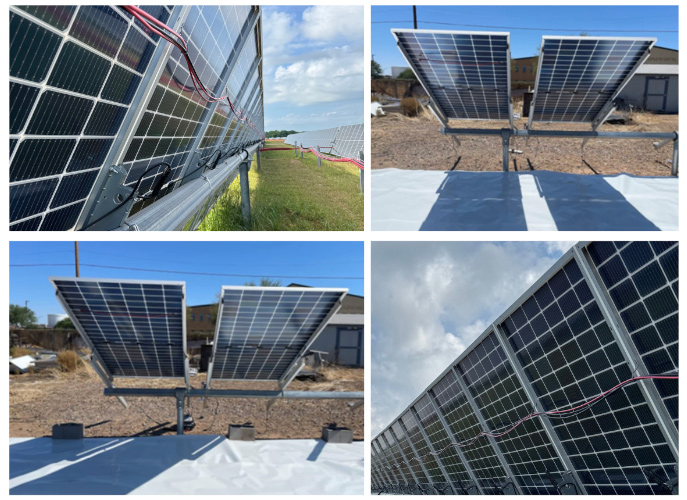
University research: Post-mounted cable shading does not affect the output of bifacial solar projects
Beyond performance, industry experience and supplier evaluations indicate that the modular post-cable tray system can significantly enhance efficiency, including reducing total cable length by approximately 20% to 30%, cutting installation time by 15% to 20%, while eliminating pinch points near torque tubes and tracker components.
Shadows can be harmful, ultimately leading to reduced energy production, improper power output, and hotspots. The industry is too cautious about this and always arranges cables along structural components such as torque tubes to prevent rear obstruction. However, due to the interaction between wiring and mobile system components, this approach increases cable length and reduces reliability. The research results and white paper prove that shadows are not a factor worth paying attention to, and rear suspension cables do not affect performance and reliability.
In addition, a novel metric, Normalized Color Ratio (NSR), was developed and subsequently used to obtain these results. So far, there is no method to quantify the backside shading effect of double-sided photovoltaic devices. NSR isolates the performance impact of cable bundles from other factors, enabling accurate assessment of the actual power generation of the power plant. By establishing standardized methods to measure variables that were previously difficult to calculate, NSR not only strengthens research conclusions but also provides a powerful new approach for the industry. In the future, NSR may help provide information for design decisions and optimize the layout of power plant cable management.
AWM produces written management products for ground mounted solar projects. The company's bonsai system uses the "golden row" method for string management, providing installation personnel with repeatable guidance along the tracking system wiring. Based on the results of this new study, AWM is further refining its design to support straight cable routing across module frameworks.
The concept of "Golden Bank" was standardized as a "reference bank" at the beginning of construction. This line serves as a blueprint for cable routing, connection points, and overall system layout, enabling staff to effectively replicate best practices across the entire site. By resolving potential conflicts early and creating clear installation benchmarks, Golden Row has reduced rework, accelerated personnel training, and improved the consistency and quality of large-scale projects.
At AWM, we view installation guidance as an extension of product design. Every detail has been carefully designed to provide consistency and predictability on site, "said Scott Rand, CEO and co-founder of AWM. Our gold plating method embodies this concept by establishing a clear standard to achieve faster and more reliable installations. With the introduction of NSR, the industry now has a validated framework to accurately assess shading effects, enabling developers and engineers to make wiser design decisions and improve the performance and long-term reliability of power plants. ”
For inquiries about our products or pricelist, please leave to us and we will be in touch within 24 hours.
 RM502, Sihai Smart Zone, No.189, Fanghu West Road, Huli District, Xiamen, Fujian, China.



© Copyright: 2026 Xiamen Wintop New Energy Tech Co., Ltd.. All Rights Reserved.

IPv6 network supported